
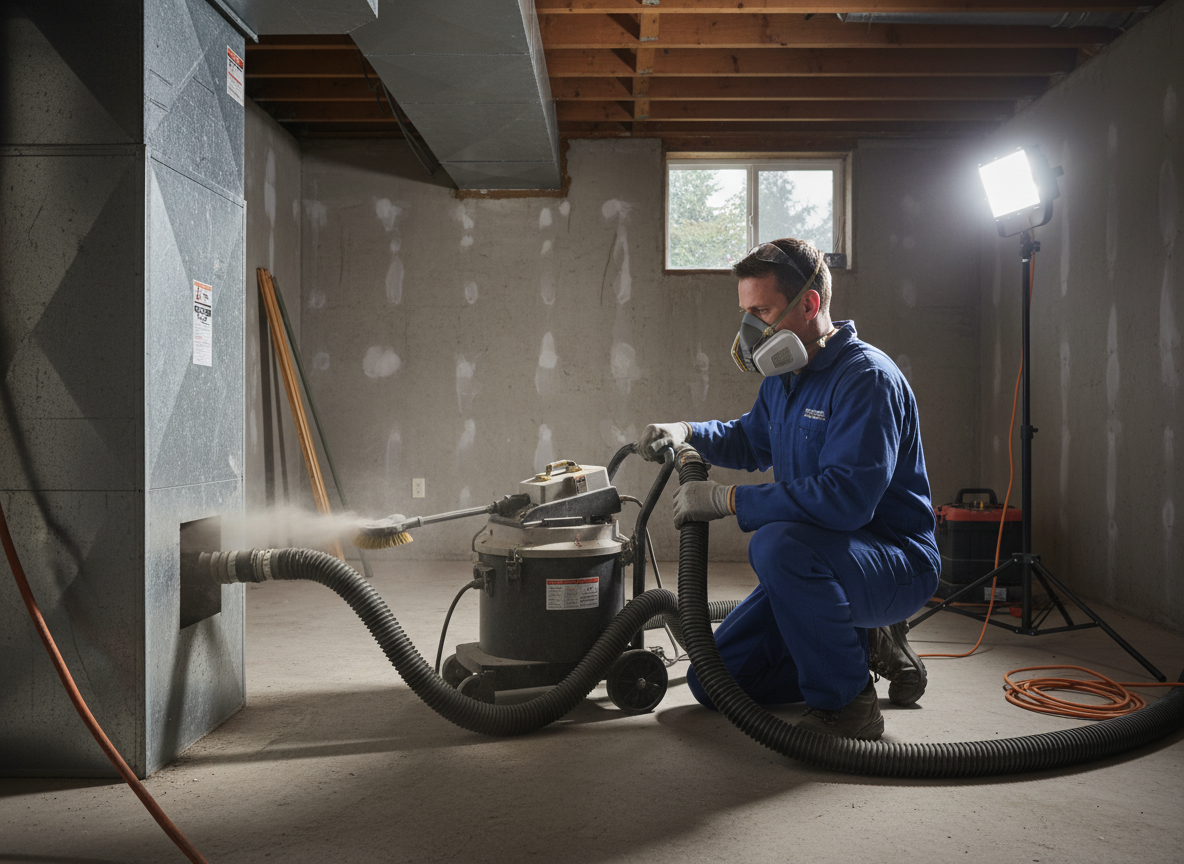
Oregon City homes from the early 1900s onward often feature narrow, multi-story duct runs that climb steep lots in neighborhoods like Canemah and the downtown core. These layouts trap fine silt from the Willamette River valley and allow condensation to form during long rainy seasons, creating hidden buildup that standard filters miss. Technicians at BreezePure Systems use negative-air machines sized for these older systems to reach every branch without disturbing plaster walls or historic registers.
Clackamas County winters bring repeated temperature swings that cause ducts to expand and contract, loosening debris that then circulates once heating resumes. In homes near the river or on slopes where crawl spaces stay cool and damp, mold colonies can start on fiberglass liners within two seasons. Our process includes camera inspection before and after every job so homeowners can see exactly what was removed from runs serving both the main floor and upstairs bedrooms.
Duct cleaning here also addresses the fine pollen and evergreen needles that enter through attic vents during fall winds. Because many Oregon City properties still rely on original galvanized or flex duct, we adjust brush heads and vacuum pressure to avoid punctures while still clearing the corners where debris collects. This attention prevents the musty odor that returns every time the furnace cycles after a wet week.
Technician insight
In Oregon City the thing that catches most people out with HVAC duct cleaning is how the constant winter dampness lets fine silt from the river valley settle in the bottom of horizontal runs that sit in crawl spaces under 1920s and 1930s homes. Homeowners often forget those low runs exist until the furnace starts pushing musty air every time the heat kicks on after a long rain.
Historic Home on the Bluff
A 1928 two-story house above the falls had reduced airflow on the second floor after several wet winters. Camera inspection showed thick dust and early mold on the liner inside the main trunk that ran through the uninsulated crawl space. We performed full negative-air cleaning, removed the moldy section of liner, and sealed the joints. The homeowner reported steady heat upstairs again and no return of the musty smell during the next rainy week.
HVAC Duct Cleaning Services We Offer
✓Residential Duct Cleaning
Full-system cleaning of supply and return runs in single-family homes throughout Oregon City and nearby Clackamas County neighborhoods.
✓Dryer Vent Cleaning
Clearing lint and moisture buildup from dryer exhaust lines that run through attics or exterior walls exposed to constant Pacific Northwest rain.
✓Crawl Space Duct Cleaning
Targeted service for ducts routed under older Oregon City homes where cool, damp soil conditions promote condensation and dust collection.
✓Air Handler Coil Cleaning
Removal of debris from evaporator coils and blower assemblies that sit in unconditioned spaces common in local split-level houses.
✓Post-Renovation Duct Cleaning
Extraction of construction dust and drywall particles from ducts after kitchen or bathroom remodels typical in historic downtown Oregon City properties.
HVAC Duct Cleaning Cost in Oregon City, OR
| Service | Typical Range | What Affects It |
|---|---|---|
| Single-story home duct cleaning | $350–$550 | Standard runs with one air handler; price rises with flex duct or limited access. |
| Two-story home duct cleaning | $450–$700 | Extra vertical runs and multiple returns common in Oregon City hillside homes. |
| Dryer vent cleaning add-on | $125–$200 | Added when vent exits through roof or long exterior wall. |
| Crawl space duct cleaning | $200–$350 | Required for homes with ducts under the floor; moisture levels affect time on site. |
Ranges are typical for Oregon City, OR and confirmed with an exact written quote before any work starts.
How it works
- 1
Initial Camera Inspection
We run a scope through every accessible supply and return line to document existing debris levels and note any damaged sections before work begins.
- 2
Register and Vent Sealing
All floor and wall registers are sealed to create negative pressure so loosened material travels only to the collection unit outside the home.
- 3
Agitation and Extraction
Rotating brushes and compressed air tools dislodge buildup while a truck-mounted vacuum pulls debris from the entire system in one continuous pass.
- 4
Final Verification
A second camera pass confirms clean surfaces, followed by reassembly of registers and a test run of the HVAC system to verify airflow.
Pricing
Cost depends on number of stories, duct material, and whether crawl space or attic access is required.